

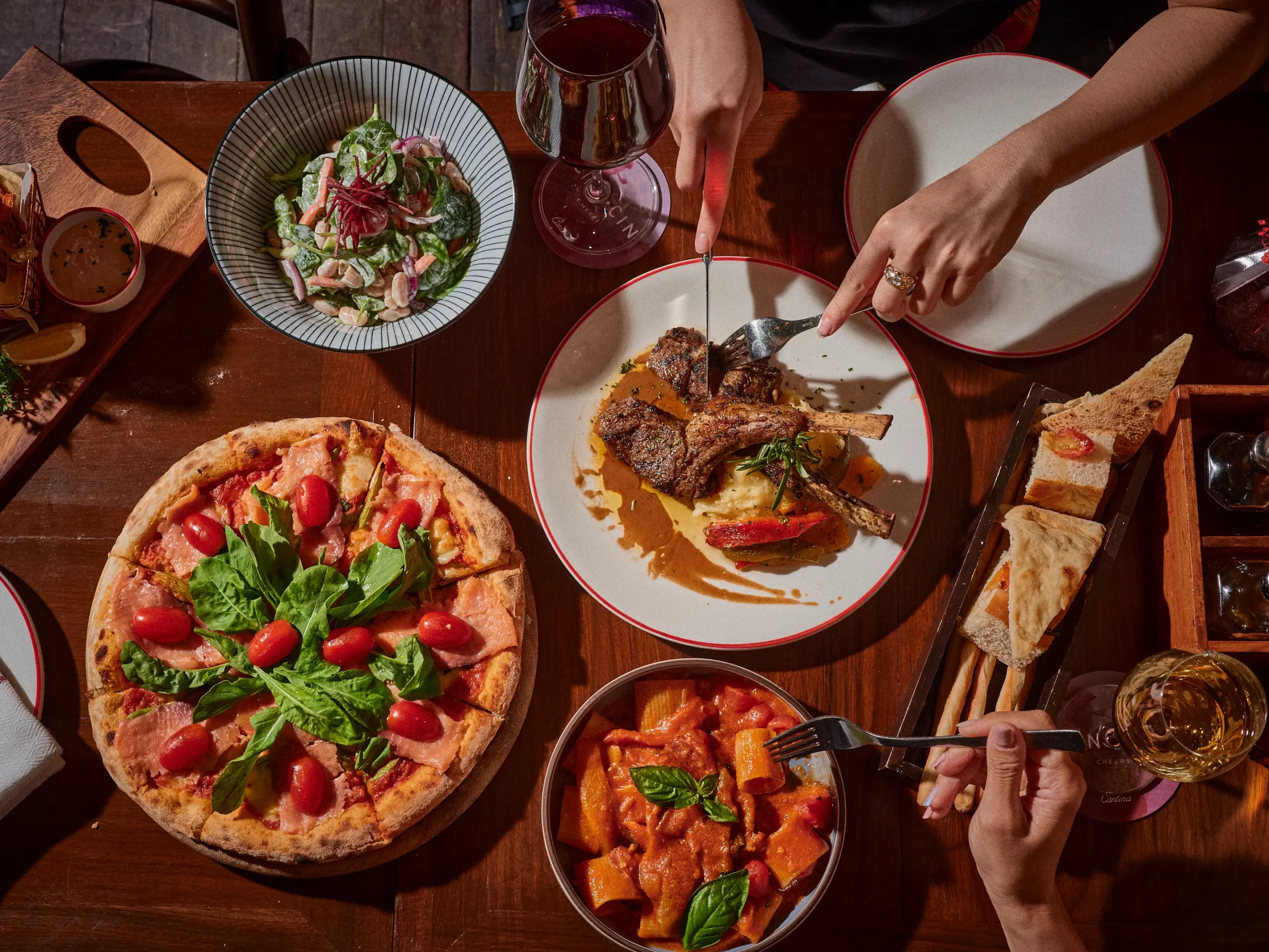
In cities that never slow down, luxury isn’t about more—it’s about command. Command over your time, your nervous system, and the version of yourself that shows up after a long day. Bangkok lives at that edge. And a small circle of dedicated Italian restaurants has learned something most places miss: the evening doesn’t start when work ends—it starts when you’re allowed to let go. Not loudly. Not dramatically. But deliberately.
1. Aperitivo as Strategy: A Soft Exit from the Day
Step into the right italian restaurant in Bangkok after a long day’s demands, sometime late afternoon or between 5 and 7 PM, and that stimulating serving of Italian social ritual, the apertivo, will make you feel the shift immediately—a positive, calming release that tells your body, this is the place to be.
It’s about momentum, not indulgence—small, intentional transitions from the crunch and release of artisanal focaccia and briny olives to the bittersweet clarity of a botanical Spritz and salt-cured antipasti.. Just momentum without pressure. That’s not accidental. Aperitivo, done properly, is not a happy hour—it’s a controlled release valve.
Ø Small plates keep commitment light and interaction fluid
Ø Bitter-sweet drinks gently tell the body the fight is over
Ø Standing, moving, circulating dissolves the posture of “meetings”
You’re not flipping a switch from work to leisure. You’re unhooking—slowly, socially, safely. Titles blur. Conversations soften. Decisions land without force. The best venues understand this window as psychological infrastructure and treat it with the same seriousness as any high-stakes environment.
2. The Italo-Mansion Aesthetic: Letting the Space Do the Work
Then there’s the room itself. Walk into a villa-style Italian space and Bangkok seems to exhale with you. This isn’t decoration—it’s environmental intervention.
Ø Residential scale replaces corporate compression
Ø Greenery, stone, and texture quiet mental noise
Ø Warm, amber light recalibrates faces and moods
No one tells you to relax. You just do. Because the space has already decided you’re safe. For hospitality leaders, this is the real lesson: people don’t unwind because they’re instructed to—they unwind because the environment removes the need for vigilance. Comfort over efficiency isn’t wasteful. It’s strategic.
3. The Transition Effect: When Ritual and Space Lock In
Aperitivo alone is just a drink. A beautiful room alone is just architecture. But when ritual and space agree, something rare happens: the transition becomes frictionless.
Ø Light shifts you from task-mode to presence
Ø Music replaces alerts with rhythm
Ø Open layouts encourage flow instead of isolation
This solves a modern problem no one names—cognitive drag. You don’t drag the day into the night. You shed it in layers. For people who operate at a high level, this isn’t indulgence. It’s maintenance. You don’t reset by stopping. You reset by changing gears without grinding.
4. The Synergy between Culture and Aesthetic: Calm That Holds
What feels effortless in these places is actually coordination. The ritual sets the pace. The aesthetic holds the mood.
Ø A Negroni (a classic, boozy Italian cocktail) slows the body
Ø Villa lighting softens perception
Ø Shared plates invite openness without obligation
Together, they create presence without performance. No rush. No self-consciousness. Conversations stretch because nothing is pushing them forward. That way, high-end relaxation isn’t just “happening”—it is being engineered through design and ritual. It’s designed restraint.
In essence, what these Italian restaurants understand is simple and rare: the end of the workday is not dead time—it’s a threshold. Treat it carelessly and you carry tension forward. Treat it intelligently and you arrive whole. By blending ritual with atmosphere, they don’t just offer relaxation—they offer continuity. And for anyone serious about performance, longevity, and sustainable success, that quiet precision is the most radical luxury there is.
